

How is Autism and ASD Determined and Diagnosed for Your Students?
When I was first teaching, my students were all so different, but at the same time all so similar. It was wild. They all intensely focused on things, but each of them focused on different things. They all had some sort of sleeping difficulty or trouble sleeping through the night. They all made repetitive movements, but each of them used a different part of their body to make these movements. They all had problems with communication, but in different ways. For example, some would use words, some would use pictures, and some would stand or sit by the snack closet until they made you understand that they were not leaving until that snack came out!
Now, they were in my classroom after being diagnosed with autism. As a special educator, I was not involved in that part of the process. Of course, when it comes to diagnosing whether or not a person has autism, it is left up to a qualified examiner. Typically that person, the qualified examiner, is going to be either:
- a psychologist
- a psychiatrist
- a school psychologist
- a licensed social worker
- a developmental pediatrician
- a pediatric neurologist
- another qualified examiner
They are typically the people who can make the formal diagnosis using specific diagnostic tools for autism and asd (autism spectrum disorder.)

On the Spectrum Meaning (What Does On the Spectrum Mean?)
If a student is diagnosed, you may hear people use the phrase the child is on the spectrum meaning that they have some form of autism, either mild symptoms or severe autism characteristics and challenges. The term "spectrum" indicates the wide range of abilities and challenges individuals may have.
There are different types of autism, ranging from individuals who need minimal support to those with severe autism, who may require significant assistance in daily life. Qualified examiners use standardized testing, observations, and developmental history to determine if someone is on the spectrum. These assessments evaluate social skills, communication, sensory responses, and more.
A diagnosis helps families and educators understand where are person is on the spectrum and what support they may need. Whether mild or severe autism, early identification is key to finding out the right set of therapies, interventions and strategies for the person on the spectrum.
Are you Ready to Step into the World of a Qualified Examiner?
In order to set up your classroom environment for your students with different types of autism, it’s important to know exactly what we are talking about when a student with autism walks in your room. For parents in the home, you already know your child and for some people, learning more about what it means to be on the spectrum, provides more clarity and understanding. Qualified examiners use many checklists, assessment and tools to identify the various types of autism. The information from the DSM-5 is one of the methods that can be used to help determine an autism and asd diagnosis.
Understanding the New Autism Diagnostic Criteria in the DSM-5
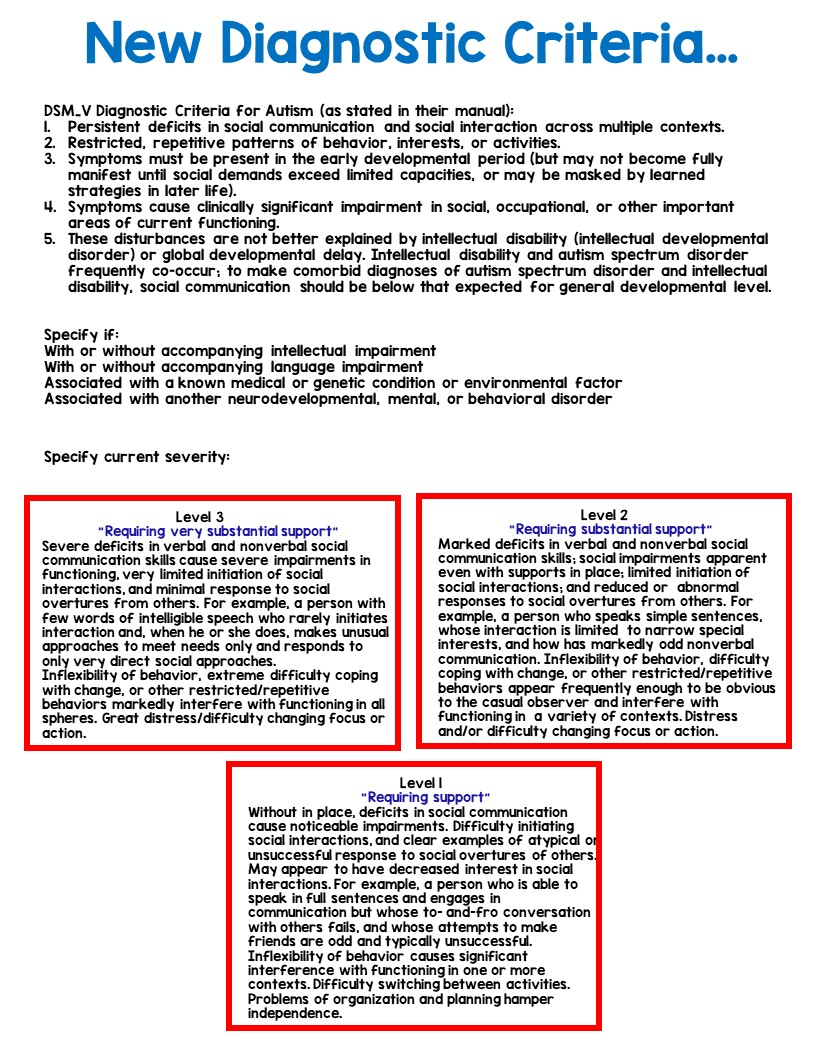
The DSM-5 introduced a new way of diagnosing autism and asd, replacing separate types of autism like Asperger’s syndrome and PDD-NOS with one broad diagnosis: Autism Spectrum Disorder (ASD). Instead of different categories, it is now classified by support levels of autism:
Level 1 Autism Spectrum Disorder
Level 2 Autism Spectrum Disorder
Level 3 Autism Spectrum Disorder
They are based on the level of assistance an person needs in daily life. Again, qualified examiners use standardized assessments, developmental history, and behavioral observations to determine the level. Here is what they are looking for. But remember each person with autism is unique and will not have all the same strengths or challenges.
ASD Level 1 (What Does Level 1 Autism Mean?)
Level 1 autism is often considered the mildest form, though it still can present challenges. Individuals at this level may struggle with social interactions and changes in routine but can usually communicate verbally and can function independently with minimal support. They may need help with organization, social skills, and adapting to new situations.
ASD Level 2 (What Does Level 2 Autism Mean?)
Level 2 autism requires more substantial support. People at level 2 may have noticeable difficulty with verbal and nonverbal communication, they may struggle with social interactions, and could showcase repetitive behaviors. They often need structured routines and assistance in handling changes in their environment.
ASD Level 3 (What Does Level 3 Autism Mean?)
Level 3 autism is the most severe autism, requiring significant support. People at this level may have limited speech or be nonverbal, they may experience intense sensory sensitivities, and find it very difficult to adapt to change. They require full-time support and intervention to help with communication and self-care skills.
Understanding these levels of autism help families and school teams plan their interventions and supports. To see the information that is in the DSM-5 about the types of autism, take a look below.
We have more articles that further explain.
Here are some related topics.
What is Autism?
Criteria for Autism
Characteristics of Autism
A Sensory Connection
Eating Difficulties in Autism
Trainings
We have articles for building skills in children with autism.
Here are some.
Communication Skills
Self-Help Skills at Home
Home Strategies
Language Skills
Play Skills
How Can You Learn More?
If you are you are a parent navigating daily challenges you might like the information from this set of emails.
Click the blue box below for parent and family tips.
If you are an educator looking for classroom strategies,
or a therapist seeking effective interventions,
our tools are designed to provide guidance and support.
You may like the information from this set of emails.
Click the yellow box below for educator tips.