
ESY. Three little letters that can spark very different reactions among special education teachers.
For some educators, Extended School Year is a welcome chance to slow things down and focus on meaningful connections with students. For others, it’s an opportunity to dive deeper into essential IEP goals without the pressure of a packed school-year schedule. And for many, ESY is simply a practical way to earn extra income during the summer months.
No matter the reason for stepping into an ESY classroom, one thing remains true: summer learning does not have to feel stressful or rigid to be effective.
In fact, some of the best ESY learning happens when students think they’re simply playing, exploring, and having fun.
With a few creative themes, inexpensive materials, and predictable routines, meaningful progress can be made that students can genuinely enjoy.
Turn Your Classroom Into a World Adventure
One of the easiest ways to make ESY engaging is by building instruction around a fun summer theme. A favorite? “Summer Around the World.”
Each week, students can “travel” to a new country. The adventure might begin with a pretend airplane ride complete with boarding passes, suitcase props, or a short virtual flight video. Suddenly, students are no longer walking into a classroom. Instead, they’re arriving in a brand-new destination.
Once “landed,” students can explore simple vocabulary in the country’s language such as hello, goodbye, yes, and no. Even practicing a few words creates exciting opportunities for communication and social interaction.
The themed learning opportunities naturally build from there:
- Creating country flags to practice fine motor skills, matching, and color recognition
- Exploring maps and landmarks to build background knowledge
- Reading culturally connected books to target WH questions, sequencing, and story elements
- Decorating the classroom with student-created crafts to increase ownership and engagement
And perhaps the most anticipated activity of all? Food.
Ending the week with a themed snack or simple cultural meal creates a memorable sensory experience that students look forward to. Even budget-friendly options can make the experience feel special. Sometimes a small taste test becomes the most fun all week.
To keep the structure of the day predictable while still feeling relaxed and summer-themed, resources like ESY-Morning Work or Homework for Students with Autism (July - ESY - Summer Ed.) can provide simple, low-prep activities that reinforce skills without overwhelming students or staff.
Bring the Beach Into Learning
Beach themes are another ESY favorite because they naturally lend themselves to hands-on learning.
A simple bucket of shells can become a powerful teaching tool.
Students can sort shells by:
- Size
- Color
- Texture
- Shape
- Type
No shells available? No problem. Summer-themed erasers, plastic sea animals, laminated pictures, or dollar-store finds work just as well.
What looks like play is actually packed with opportunities to practice:
- Categorization
- Following directions
- Receptive and expressive language
- Turn taking
- Descriptive vocabulary
- Fine motor skills
For some students, sorting into containers may be the goal. Others may work on using descriptive language such as big, small, smooth, or rough. The beauty of these activities is how easily they can be adapted for different communication and developmental levels.
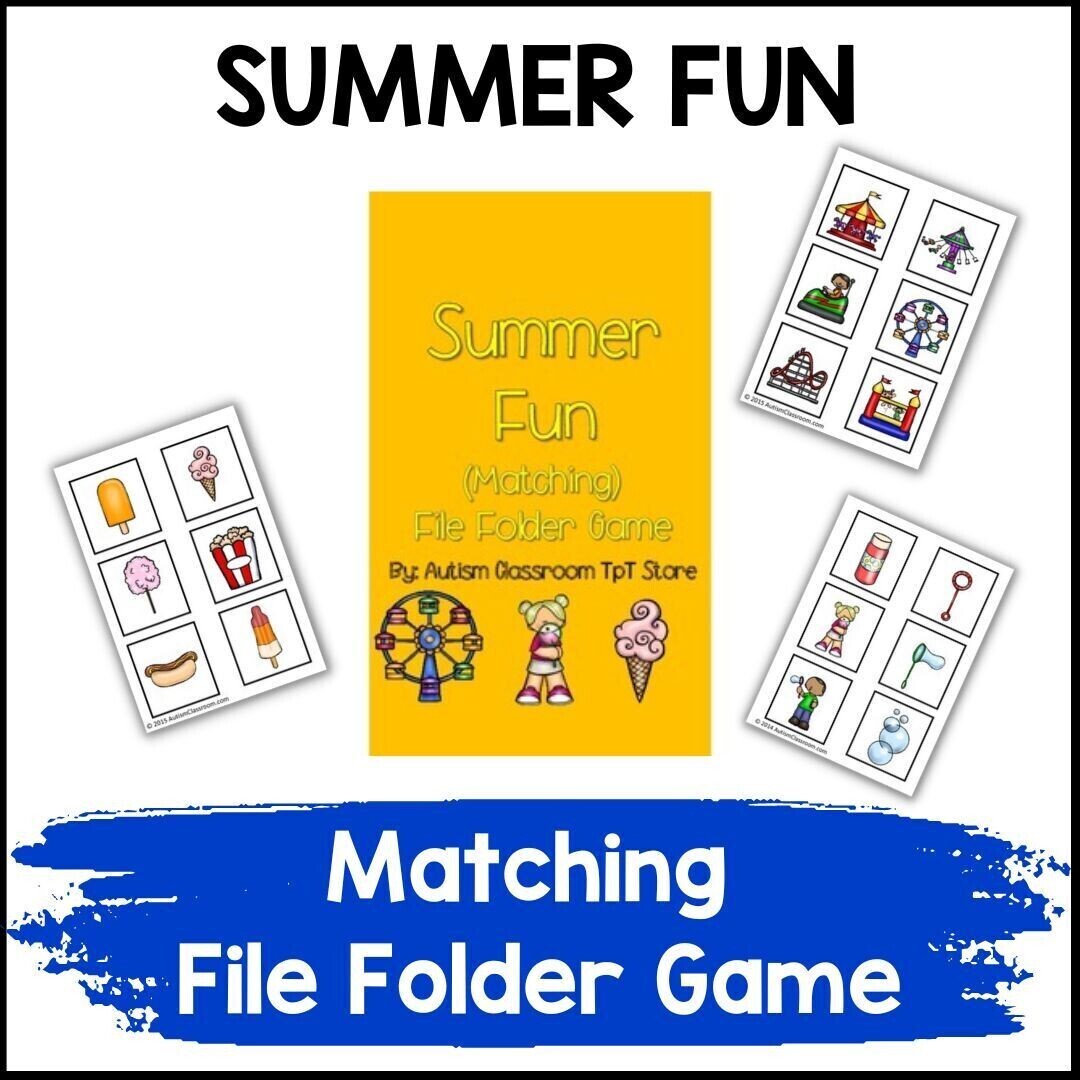
Resources such as Autism File Folder Games- 3 Under the Sea Summer Matching Games and Summer Fun File Folder Games are perfect for reinforcing matching, visual discrimination, and independent work skills while keeping the beach and ocean theme exciting for students.

Teachers looking for additional low-prep practice can also incorporate:
- Task Cards - Identify the Same (Summer Items) by Autism Classroom
- Task Cards- Summer Items (Which One is Different?) by Autism Classroom
- Positions: Preposition Question Cards - Spring & Summer Edition (Autism/SPED)
These activities easily target language, visual scanning, positional concepts, and critical thinking in a way that still feels playful and seasonal.
Summer Learning Can Still Build Academic Skills
One of the biggest ESY misconceptions is that summer learning has to mean endless worksheets or repetitive drill work. In reality, academic skills can be woven naturally into fun, engaging activities.
For students working on early math goals, summer-themed counting and number activities can make practice feel less intimidating and more meaningful. Resources like Number Recognition Worksheets SUMMER (One to One Correspondence & Number Sense) and the BUNDLE - Number Recognition Worksheets (One to One Correspondence & Number Sense) provide structured opportunities to reinforce counting, number identification, and one-to-one correspondence while still maintaining a fun summer feel.
For younger learners or students needing additional visual supports, Summer Printables (PreK, K, Special Ed. and Autism) can provide a variety of adaptable activities for centers, independent work, or take-home practice.
And for educators wanting to bring more sensory engagement into lessons, The Wrecked Printable! Sensory Lessons for SUMMER (Speaking and Listening CC) offers opportunities to combine communication, listening, and sensory exploration, which can be a powerful combination for many autistic learners.

The Secret Ingredient is Consistency
While summer learning should feel lighter and more relaxed, consistency still matters.
Predictable routines help students feel safe, regulated, and ready to learn. Starting and ending the day with familiar activities like a welcome song, like our own good morning video, morning meeting songs, like our own playlist of elementary opening video songs, (middle and high school songs are here), movement breaks or calming routine creates structure without making the classroom feel overly academic.
Even simple, no-prep morning work can make transitions smoother and set a positive tone for the day.
The goal of ESY isn’t to recreate the traditional school year. It’s to maintain skills, encourage growth, and keep students connected to learning in ways that feel natural and meaningful.
And often, the most powerful learning moments happen when nobody realizes “instruction” is taking place at all.
When Fun and Progress Work Together
There’s a common misconception that IEP progress requires constant table work, worksheets, or highly structured drills. But many autistic students demonstrate stronger communication, regulation, and engagement when learning happens through movement, creativity, and shared experiences.
Hands-on summer activities can:
- Reduce challenging behaviors
- Increase participation
- Create authentic opportunities for communication
- Strengthen social connections
- Build positive associations with learning
Most importantly, they remind us that learning and joy can coexist.
Sometimes the biggest ESY victories happen during a pretend airplane ride, while sorting seashells, or over a shared snack at the end of the week, because these moments that may look simple on the surface are building confidence, communication, and connection underneath it all.