
The first week of school in an autism classroom is a whirlwind. Some days you just feel so alone in this.
Everyone is adjusting at once. Here are a few tips to help you through.
1. Get your routines together first.
Students need to learn how to be in the classroom before they can learn what you’re teaching. Write out how you want it to go in a best case scenerio. Write out the ultimate dream of how you want each routine to run. Have a clear system for and practice arrival, unpacking personal items, transitions, sitting, lining up, and dismissal. Make students do them independently as much as possible. It may feel repetitive, but this is what prevents chaos later and builds independence.
- Consistent arrival routines
- The same order of activities each day
- Smooth, predictable transitions
2. Teach every single thing you want your students to know.
Even if students have been in school before, treat everything like it’s brand new. Model exactly what to do, use visuals, and provide prompts. Avoid shortcuts if you can. Take the time now to make them do the routine correctly so that you do no have to re-teach it later. Independence comes later. Right now, clarity matters more.
3. Get your visual supports up immediately.
Schedules, first/then boards, labels, and expectations should be visible and actively used from day one. They are the backbone of communication and behavior support. Although they take some time to make, it may be helpful to have a starter set until you cam make the exact ones you want. We have those in our store:
Schedules - see some here
First/then boards - see some here
Labels - see some here
Expectations - see some here
If you need some, our signature classroom set up course, Step by Step Autism Classroom Design (check the course link at the top of the page for more info), has a module on visual supports with downloadable supports and picture cards. Or, see our Autism Visuals: A Bundle Pack of Visual Supports or the blog article about visual supports here.
4. Focus on regulation to help students feel comfortable in the new setting.
If a student is dysregulated, learning will not happen. Watch for signs of sensory overload, anxiety, or confusion. Build in breaks, offer choices, and attempt to create a calm environment. A regulated student is far more ready to engage.
5. Be the fun person students want to be around and listen to. Pair yourself with reinforcement.
Students need to see you as someone who brings good things. Spend time learning what they like and deliver those items freely at first. However, set boundaries from the start. Some toys or fidgets are only available if the directions are being followed or if the correct action (ex. staying in your seat, keeping hands to self) are followed. This builds trust and reduces resistance when expectations increase later. Be sure to have a transition bin (that you control) filled with toys or fidgets at each area you want them to go to. At first allow a longer time to interact with the toys, then as after one week, decrease the time.
7. Be the leader your team needs.
Use some of our training supports before the students even get there. For example, The Confident Para training, or our Autism Classroom Design course will get you the background knowledge you are looking for. The course will also provide classroom teachers with pre-developed trainings you can deliver to a team, email templates to send your team for mini-doses of strategies and tips each month and a training workbook for your paraprofessionals. All already created and ready for download! Another way to get there is to loon through our strategy-packed and activity-packed blogs on this website.
8. Over-communicate with families.
Pre-plan what you will write to parents. Have several things you need to communicate throughout the year ready on a "doc" for when you need to send it so that you can edit or update it when it needs to go out. You can also create notes to send home and have them ready so you communicate something the first day and the first week. This builds trust early and consistent communication could prevent misunderstandings later.
The first week is the perfect time to decide how you’ll communicate with families all year. Will it be daily notes? Weekly emails? A communication app? All are great choices.
What matters most is consistency. Pick a system you can realistically maintain and stick with it. If you want to start with a note home, our School to Home End of the Day Note is one where students let parents know what happended throughout the day.
9. This is part of the experience. Expect behaviors and plan for them.
You are not going to believe what happens this week. Just remember to stay calm. Have a plan for keeping yourself and others safe. Find out who might be a wanderer, runner, biter before school starts. Ask the admin ahead of time what you should do if a truly challenging behavior occurs. Who to call, what to do, what to write up after. Have your own paper towels (that actually soak up stuff) ready. Wear your jean jacket to keep your arms safe, if needed.
New environments bring uncertainty, and uncertainty often brings behavior. Stay as consistent as you can, reduce (not eliminate) demands when needed. Unexpected behaviors are guaranteed during week one. New environments do result in stress for kids and adults.
Having a plan ahead of time makes all the difference.
Ask yourself:
- Where can students go to reset?
- What tools are available?
- What signals will you use to ask for help?
This way, you know your next step, and you respond calmly instead of reactively. For more on behaviors, see our behavior page on the blog.
10. Keep it simple.
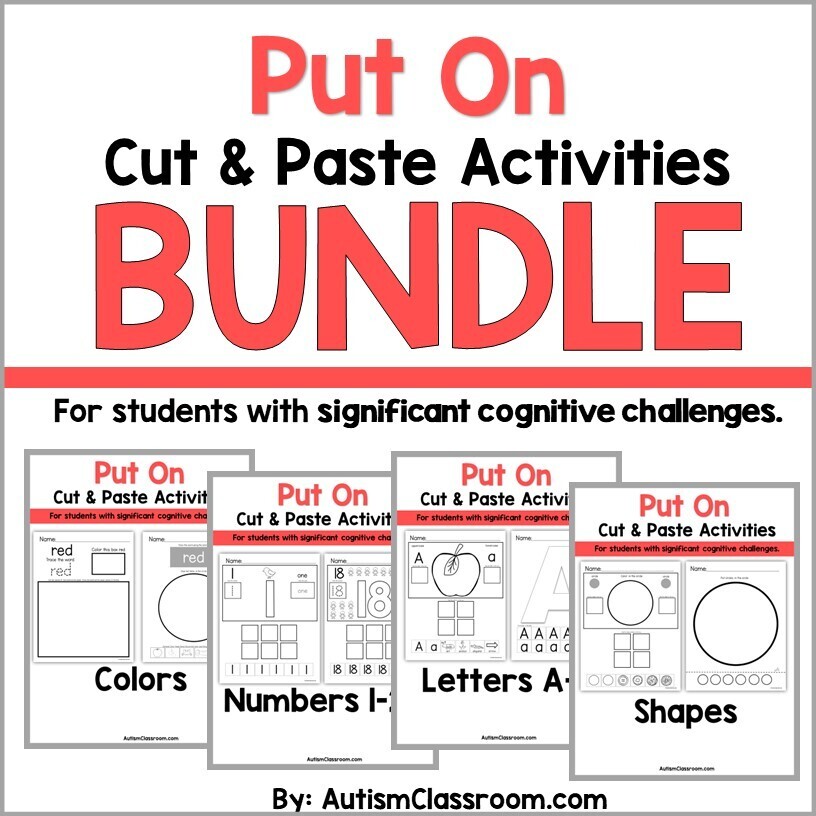
It is easy to over-plan and burn out immediately. You do not need elaborate lessons the first week. See our blog on free downloads for the first week. Howeve, simple, structured, repeatable activities will be far more effective. For quick, easy activities, see our "put on" activities here.
11. Lastly, remember you!
Pro tip: Pack an easy-to-eat lunch every day the first 3 weeks. Eat lunch. Drink water. Hide it from your students, but drink it. Take a bathroom break.
And if you want a little extra support, my classroom set up book How to Set Up a Classroom for Students with Autism - 4th Edition walks you through exactly how to set up an autism classroom so you start the year feeling more prepared, less overwhelmed, and more confident.
You don’t have to figure this out alone.
Join our mailing list for more strategies and ideas for your classroom!